7 months ago
21
7 months ago
21
 “N Crowd Improv” by EightK is licensed under CC BY-NC-ND 2.0.
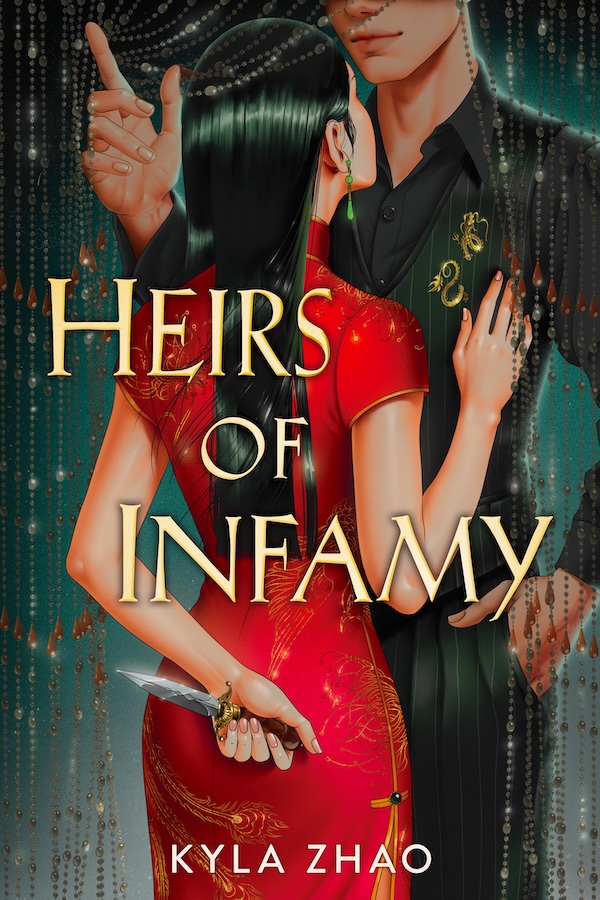
Today’s post is by novelist Kyla Zhao, author of the forthcoming Heirs of Infamy.
Early last year, I started taking improv comedy classes—not because I wanted to perform, but because I needed a respite from writing.
Now that I’m a published author with three books out from Penguin Random House, it’s difficult not to internalize a constant hum of evaluation. I’ve developed a sense of what the market wants, what my readership responds to, how my work might be received. Reviews exist. Sales exist. And those expectations constantly linger in the back of my mind, quietly shaping decisions I might not even realize I’m making.
Then one day, an Instagram ad for an improv comedy class in my neighborhood popped up. I’d never thought of myself as particularly funny, but I figured I had nothing to lose. So I signed up.
For anyone unfamiliar, improv comedy is unscripted, collaborative storytelling performed live. You walk onstage with no plan, receive a prompt from the audience—something like “pineapple” or “tax audit”—and build a scene in real time with no rehearsals or revisions. As a hardcore plotter—the kind who writes 10,000-word outlines before Chapter One—improv pushed me completely out of my comfort zone.
To my surprise, I found it exhilarating. After every session, I walked offstage buzzing—not because I thought I’d done particularly well (there were plenty of moments I knew I could’ve handled better), but because I was pushing myself. As I kept attending class and performing scenes, I began to realize improv was quietly teaching me something important about writing novels.
Creating without fear
In improv, one of the first lessons you learn is commitment: hesitation is far more dangerous than being wrong. Comedy doesn’t come from saying the cleverest thing; it comes from saying something and standing behind it. You can say something utterly ridiculous, but when you say it with complete conviction, the audience doesn’t laugh at you—they laugh with you.
That instinct doesn’t come naturally to me. I’ll often catch myself pausing onstage, searching for the “best” response. I’m especially hesitant to make bold physical or vocal choices because I don’t want to look foolish. Then there’s my classmate, who once bounded across the stage chittering like an ape for an entire scene. If he’d hesitated even slightly, I might have felt embarrassed on his behalf. But because he committed so completely and unapologetically, I found myself utterly absorbed.
Watching him clarified something important for me about writing. When I hedge in my novels—overexplaining motivation, questioning whether an idea is “trendy,” pulling back from an extreme choice—it’s the same impulse at work: self-protection. I let doubts about audience and reception drown out my creative instincts. But just like onstage, hesitation drains momentum. A bold choice, even an imperfect one, gives the story something to push against.
Curiosity over control
The foundational rule of improv is “Yes, and.” Whatever your partner offers, you accept it and build on it. If your scene partner says, “My toes turned into peanut butter,” you don’t negate it—you respond, “Yes, and I hope it’s the crunchy kind.” The point isn’t to land on the best idea; it’s to keep the scene alive.
That rule forced me to experience what happens when you stop pre-editing yourself. One night, I walked onstage with a completely blank mind, panicked, and started moving my arms in a circular motion. A beat later, I realized I was miming stirring a pot. That simple, unplanned gesture turned into a scene about a cannibal couple inviting their neighbor over for dinner. It worked precisely because I didn’t pause to evaluate whether it was a good idea—I committed and moved forward.
But commitment alone isn’t enough—it has to be paired with listening. Improv scenes fall apart the moment you stop listening and start planning your next move. I’ve frozen onstage more than once when a scene partner said something wildly unexpected and my internal outline shattered. In those moments, clinging to what I thought the scene would be is the fastest way to kill it.
That same dynamic shows up in writing. Too often, writers shut down ideas before they’ve had a chance to evolve. “Yes, and” privileges momentum over judgment, curiosity over control. When dialogue feels stiff or events feel forced, it’s often because I’m enforcing a plan instead of responding to the characters in front of me. Some of my strongest scenes emerged when I let a character derail my outline—and followed them instead.
The gift of impermanence
When you’re writing a novel, you live with the same project for years. On any given day—sometimes within the same hour—you can swing wildly between this is a flaming pile of trash and this might be the best thing I’ll ever write. You sit with scenes and decisions for months. Sometimes years. It’s hard not to linger, obsess, and spiral.
In contrast, improv’s impermanence is one of its greatest luxuries. A scene happens once. You walk offstage, and that’s it. Whether it soared or fizzled, it’s over—there’s no opportunity to relive it or fix it. Of course, I want to get better at improv. But there’s something healthy about being given permission to move on—to dust yourself off, take what you learned, and not dwell.
That mindset has been quietly reshaping how I think about my writing as well. I don’t think I’ll ever become a pantser—I like structure and having a compass. But I’ve started noticing how knowing too much too early can drain the joy from the process. When every scene feels like a means to an end, it’s easy to lose sight of the moment you’re actually writing.
Lately, I’ve been trying to focus on the scene itself—treating it as a small, self-contained story. The outline still exists, but instead of constantly measuring my progress against the larger architecture, I let myself savor the act of writing in front of me.
Rediscovering play
More than anything else, improv gave me back something I didn’t realize I’d lost: play. It reminded me that not every creative act needs to be optimized or perfected.
I didn’t start improv to improve my writing. But it ended up teaching me how to let go, listen better, take risks, and move on when something doesn’t work.
Now, my writing feels lighter. I’m less afraid of making the wrong choice—and more interested in making a choice and seeing where it leads.