5 months ago
21
5 months ago
21
 Photo by Magda Ehlers
Today’s guest post is by author Oona Metz.
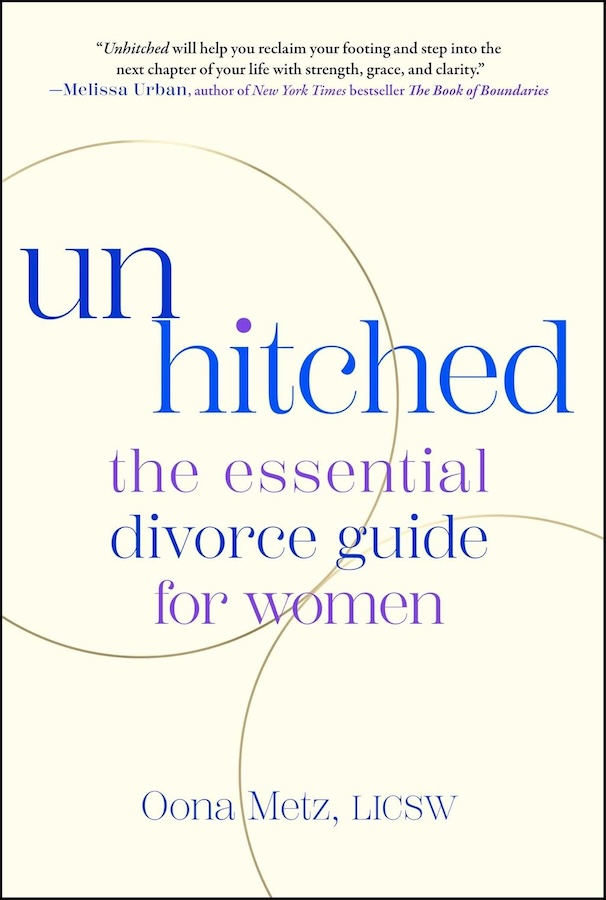
I am a therapist who specializes in working with women navigating divorce and the author of Unhitched: The Essential Divorce Book for Women (Gallery Books/Simon & Schuster, January 2026). When I received an offer of publication in early 2024, my social media following was in the low hundreds. I knew I needed a bigger platform to launch my book and explored all options.
First, I hired a social media consultant who taught me the difference between reels and stories, hashtags and handles. Despite the help, my accounts grew slowly and I wanted additional ways to tell the world about my book.
Then, out of the blue, in the fall of 2024, my publisher connected me to Reshma Saujani, whose podcast My So-Called Midlife was just starting. Reshma is a lawyer, politician, author and founder of Girls Who Code and Moms First. She has a huge social media following. I was anxious about being on Reshma’s show as her other early guests were big names like Chelsea Clinton, Ketanji Brown Jackson, and Julia Louis-Dreyfus, but Reshma’s easy conversational style made the hour fly by. I loved talking about the book and divorce and even felt so comfortable that I teased Reshma about needing more couples therapy.
Unfortunately, my episode was scheduled to air the morning after the 2024 election when attention was sure to be elsewhere. Ultimately, Reshma’s team decided to delay by one day and picked a title that matched the times we were in. Our episode Don’t Despair, Divorce! came out two days after the election. It’s hard to know how timing impacted that episode but despite my fears that no one would listen, many people tuned in and I gained about 300 new social media followers in the days after it was released. It’s hard to say if it would have done better or worse if it had aired on a different week, but one thing to keep in mind about podcasts is that many listeners tune in weeks or months afterwards.
Later that month, full of despair about the election, but hopeful about my book, I turned my final manuscript into my publisher and began a year of promotion. As a therapist, I spend most of my days listening, but being a podcast guest has revealed how much I also like talking. In 2025, in preparation for my book’s launch day in 2026, I was a guest on over 50 podcasts. Here is what I learned.
Pay attention to podcast timing
Your publisher wants you to “flood the zone” on launch week. I would recommend that you start pitching early—I started about 6 months before launch. What surprised me was how flexible hosts were in timing when the episode would air. When I recorded in the fall, most agreed to air our episode during launch week or the weeks surrounding it. I recorded a few episodes 6 months before launch and those hosts agreed to air my episode right away and again during publication week. There is no harm in having an episode drop well before your book comes out or months afterwards, but in general, you are aiming to get as many as possible in those few weeks around your publication date.
Look for promotion on social media
One of the hidden benefits of podcast guesting is that nearly every podcaster has social media accounts and will post about each episode. Almost all are willing to collaborate, so in addition to listeners hearing about your book, your social media accounts will grow as well. Many hosts post episodes on multiple platforms. I feel awkward speaking directly into a camera but I don’t mind being filmed in conversation, so another perk is that I now have some great YouTube clips to use.
Don’t be picky
I accepted every offer that came my way. Some authors will tell you not to waste your time on smaller podcasts who don’t have many listeners, but I found that every conversation was worthwhile, even if it just gave me a chance to practice talking about my book. Guesting on smaller or newer podcasts also gave me a chance to be generous to those just starting out, just as Reshma and other larger podcasts had done with me. It felt good to pay it forward with those smaller accounts.
Be creative in which podcasts you approach
Some podcasts will be a direct match with the subject of your book but think outside of the box, too. There are plenty of divorce podcasts, so that was an obvious fit for me, but I decided to broaden my search. I ended up on shows about women in midlife like Glow Up, Gyrl and therapy related podcasts like Insights from the Couch as well as sex-related podcasts like Sex Esteem. I was on Grief’d Up discussing divorce grief, and Friend Forward talking about supporting friends going through divorce. I talked to the hosts of Sisters in Sobriety about the intersection of sobriety and divorce and explored the process of writing on Books From Your Therapist. One of my favorite episodes was talking to Caty Borum on We Disrupt This Broadcast about the issue of coercive control in the TV series Bad Sisters. We had such a meaningful conversation that I later asked her to be my conversation partner at my book launch event.
If you need it, get pitching help
Your publisher will tell you they will pitch podcasts for you, but unless you are a celebrity, their attention might be elsewhere. If you accept this reality early on, you will avoid a lot of frustration. I pitched myself to podcasts for the first few months and then hired a friend who had worked in PR to pitch for me. In the end, I landed 10 podcasts myself, my publisher landed 3, and the friend I hired got me the rest.
Stay organized
Every podcast requires something different. Some are audio only, some are video. Almost all need a bio and headshot. Some want a PDF of your book, others don’t. Some ask you what topics you want to discuss and others ask you to give them specific interview questions. Many podcasts use Zoom or Riverside but some use other platforms, all easy and free. I used my laptop for all of the episodes and only two wanted me to use an external microphone (which they sent me in the mail). I used my AirPods for nearly every episode. About a month before my book launched, I was scheduling six to eight podcasts a week and it really helped to sit down every Sunday night and make a list of each one, their platforms, and what questions I had suggested. At first I tried not to repeat my outfits when I was on video, but once I was recording multiple episodes a week, my closet couldn’t accommodate a new outfit for each one.
Have fun and make a new friend
Don’t be afraid to use humor at the right times. Divorce is serious business but I laughed a lot on these episodes and even made some new friends. When we were recording Divorced People, the host mentioned living in Durham, North Carolina. I asked her if she knew the host of Grief’d Up who also lives there and it turns out they are friends. I’ve developed a nothing-to-lose attitude since becoming an author and suggested they should fly me down to North Carolina for an event. They agreed and brought me down for an anti-Valentine’s Day panel. I count them as friends now.
Learn more from Oona at this week’s free business class on landing a Big Five book deal with limited platform.