2 months ago
16
2 months ago
16
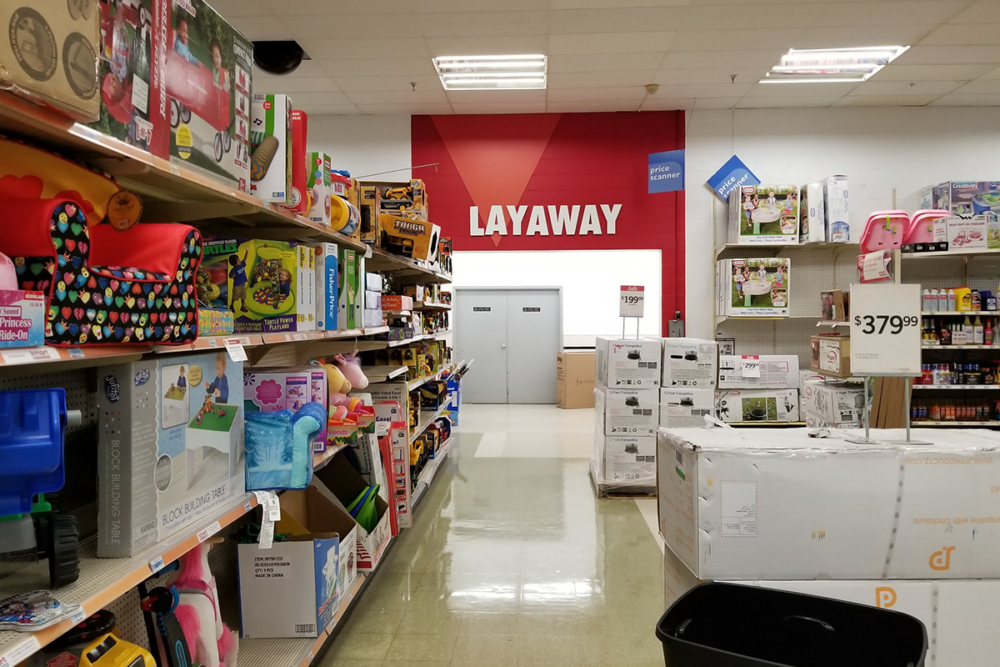
“Layaway” by Nicholas Eckhart is licensed under CC BY-NC-SA 2.0 


 .
.
Today’s post is by writer and editor Lisa Cooper Ellison. Join her on Wednesday, June 24, for the online class Building Better Memoir Scenes.
The webinar is about to begin. I can’t see anyone, but I imagine them at their writing desks, pens poised over notebooks. Waiting. They’re hoping to learn the rules—or better yet, a magic formula—that will bring their prose to life.
I want to give that to them. Hell, I want that for myself. And yet, years as a writer and writing coach have taught me two things: there is no magic formula, and studying and practicing the storytelling rules will only get you so far. At some point, you must let go of the best practices and the story you think you know, so that you can discover the one that wishes to be told.
One of the first edicts writers learn is “show don’t tell.” But in memoir, both showing and telling are essential. We show to reveal the plot and our characters’ transformations. We tell to reflect and efficiently bridge the gaps between scenes, ensuring the stepping stones from one moment to the next follow a seamless logic.
Scenes are where writers let loose. When we slow down to show what happened, the logical parts of our brain step aside, allowing us to fully connect with the memory we’re trying to render. As this happens, the unconscious takes the reins. Significant details emerge. Associations you couldn’t consciously plan are made. Patterns arise that you’ve been blind to.
Here’s an example from a story about shopping addiction by a hypothetical client named Jill. Her first draft was mostly telling or exposition: We were poor. Mom and I both hated school-clothes shopping when I was a kid. I rarely got what I wanted.
We learn a little about the narrator and her family in this excerpt, but it leaves me with more questions than answers. Why do they hate school-clothes shopping? What does “poor” look like in this family? Is there something else going on? A scene where mother and daughter go school-clothes shopping could give us a clearer picture:
School had just ended, yet there we were, standing in the layaway line at Hills Department Store while my friends swam at the pool. Mom eyed the pile of clothes in our cart as we inched toward the cashier. The Jordache jeans I’d chosen—the lone pair of pants without the pink clearance sticker—sat on top. Mom mentally calculated our total. I held my breath, praying that this time we had enough. She set my jeans on a nearby rack, recalculated the total, then returned them to the cart.
But there were five customers in front of us, and Mom wouldn’t stop tallying until we reached the counter, so the pants were set aside then added to the cart again. And again. As we finally neared the checkout counter, she draped the jeans over the discard rack other mothers in our rustbelt town had used before her. I stared at the remaining pairs of discount jeans in our cart. Like last year, I’d have to make them work. But just as the cashier was about to hit the total button, Mom said, “Wait, there’s one more.” Finally, I’d scored something the cool kids wore.
If we analyze this scene, we might notice that both characters are anxious. Because we’re only in the narrator’s head, we don’t know if Mom’s going to bounce a check, deal with repercussions from an overbearing husband who expects her to stay on budget, or face something else. But we know Jill wants to be seen as cool.
But why is being cool so important? And how does that relate to the narrator’s eventual shopping addiction?
A little journaling and some research into shopping addiction led to this revelation: feeling deprived caused insecurity, worthlessness, and the belief that having the right things would fix this. Jill could share this as a reflection at the end of the scene, but showing is more powerful, so it was time to let go again.
This time, we explored possibilities rather than trying to find the right details or the perfect ending. One trick I shared with Jill is creating a list of ten potential endings. Why ten? Because writing many endings lowers the stakes of each one, which allows your brain to free associate and play with possibilities. The more it plays, the better your answers become.
As Jill created the list, she remembered that one of the popular girls smiled at her as she left the store. It was as if buying those jeans had changed everything about her. Now the scene has a point and a detail that could help us bring it home.
I watched the clerk ring us up and fold those jeans between layers of tissue paper before carefully adding them to the layaway box Mom would pick up on the first of September. I wouldn’t touch those jeans for months. Still, I stood straighter as we walked toward the exit. And when Mary Collins, our high school’s head cheerleader, smiled and waved from behind the popcorn counter, I did something I’d never dared to consider: I smiled back.
So how do you let go as a scene writer?
Decide what to show
Scenes are great for what Andre Dubus calls vertical moments, or the pivotal moments where change occurs. If you haven’t already done so, make a list of your memoir’s vertical moments. Then choose one and grab your notebook. Before you start writing, close your eyes, take a few deep breaths, and imagine you’re reliving that experience. What did you see, smell, feel, or hear in this place? What did you do? Who’s there? What did they say? If you need to act something out, move around so that you can embody this moment. Feel free to take notes as you do so.
Once you’ve fully arrived, open your eyes and write without stopping or crossing things out until the scene feels complete. Writing without editing helps you release the rules and enter the flow state where your best work comes from. If you’re not sure how to begin, start at the point where your narrator wants something. As Kurt Vonnegut says, it can be as simple as a glass of water. On your next pass, enhance your scene with sensory details. If the scene includes two or more characters, add a conversation. At this point, your job is to make the scene as cinematic as possible. Once it feels ready, set it aside for at least an hour, but preferably a day or two.
Analyze your scene
As you return to this scene with fresh eyes, analyze the dynamics between your characters. What did the narrator want? What got in their way? What did they ultimately get? What did you write that surprised you?
Once you’ve answered these questions, send your work to a writing buddy. Ask them where your scene came to life. What caught their eye? What patterns emerged that relate to your overall story? Their feedback could reveal what to cut and what to enhance, as well as your scene’s point.
As you keep revising, pay close attention to any surprises—they often point to the story that really wants to be told. Also, part of the fun of memoir writing is discovering what you don’t know about your life. Those insights are what keep us writing during the long slog when we’re practicing all the skills we’ve learned from books, podcasts, and webinars. The more fun you can have, the more sustainable your writing life will be. And that’s as close to a magic formula as I can give you.
Note from Jane: If you enjoyed this post, join us on Wednesday, June 24 for the online class Building Better Memoir Scenes.